
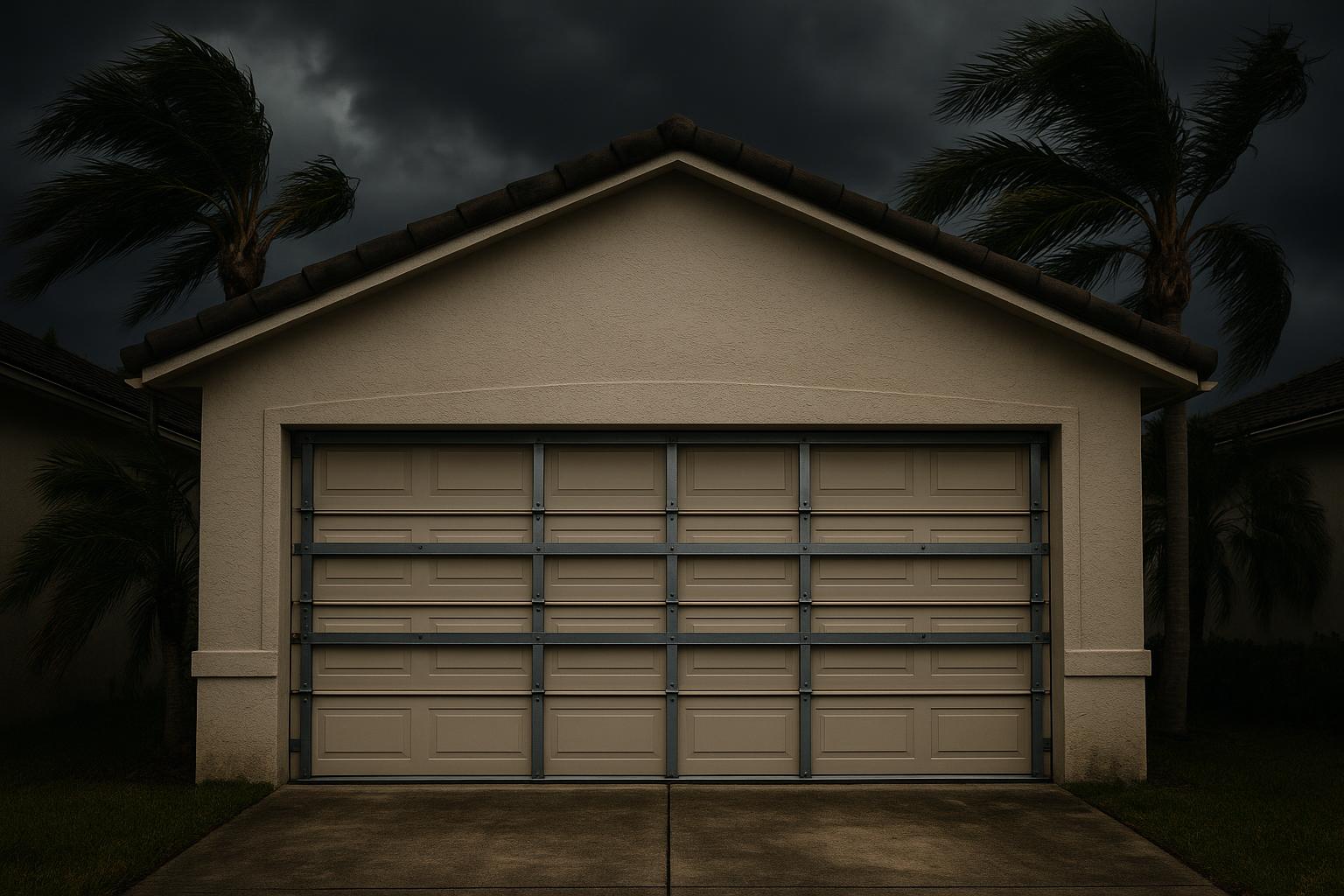
Your Garage Door Is Your Home's Weak Spot During a Hurricane
If you've lived in Port Charlotte for any length of time, you know that hurricane season isn't something to take lightly. From June through November, the threat of tropical storms and hurricanes is a reality that every homeowner in Southwest Florida has to plan for. And while most people focus on shutters, sandbags, and stocking up on supplies, there's one critical part of your home that often gets overlooked: your garage door.
Your garage door is likely the largest opening on your home. If it fails during a storm — whether it blows inward, buckles, or gets ripped off its tracks — the sudden change in pressure inside your home can cause catastrophic structural damage. Wind enters the garage, pushes up on the roof, and in the worst cases, the roof lifts off entirely.
The good news is that there are practical steps you can take right now to protect your garage door and your home before the next storm arrives.
Understand Why Garage Doors Are So Vulnerable
Standard residential garage doors are designed to keep out rain, pests, and everyday weather. They're not engineered to withstand sustained winds of 100 miles per hour or more unless they've been specifically rated for it. Most single-car garage doors span about 8 to 9 feet wide, and double-car doors can be 16 feet or more. That's a massive surface area for wind to push against.
During a hurricane, wind doesn't just blow in one direction. It creates intense pressure differentials — pushing on one side of your home while pulling on another. A weak garage door can collapse inward under that pressure, and once the wind gets inside, the damage compounds quickly.
Option 1: Install a Wind-Rated Garage Door
The most effective long-term solution is to replace your existing garage door with one that's been tested and rated for high-wind conditions. In Florida, look for doors that meet the Miami-Dade County wind code or have a Florida Building Code approval for high-velocity hurricane zones.
These doors are built with reinforced panels, heavier-gauge steel, and stronger hardware. Many also feature impact-resistant designs that can handle flying debris — one of the biggest dangers during a hurricane.
If you're already thinking about replacing an aging garage door, upgrading to a wind-rated model is a smart investment. It protects your home, can lower your homeowner's insurance premiums, and adds to your property's resale value. For homeowners in Port Charlotte and the surrounding areas like Punta Gorda, North Port, and Englewood, this kind of upgrade makes a lot of sense given our exposure to Gulf storms.
Option 2: Add a Garage Door Bracing Kit
If a full door replacement isn't in your budget right now, a garage door bracing kit is a solid alternative. These kits use horizontal bars or vertical braces that attach to the inside of your garage door and anchor into the floor or the door track system. When a storm is approaching, you install the braces to reinforce the door against wind pressure.
There are two main types:
- Permanent bracing systems: These stay mounted on the door year-round and are always ready to go. They add some weight to the door, so your opener and springs may need to be adjusted.
- Removable bracing kits: These are stored in your garage and installed when a storm warning is issued. They're more affordable but require you to physically set them up before the storm hits, which means you need time and advance warning.
Either option is far better than leaving your garage door unprotected. If you go with a permanent system, it's worth having a professional make sure your door's springs and opener can handle the added load.
Inspect and Maintain Your Existing Door
Even if you're not ready to upgrade or install braces, basic maintenance goes a long way toward making your garage door more storm-resistant. Here's what to check:
- Tracks and rollers: Make sure the door moves smoothly in its tracks. Bent tracks or worn rollers can cause the door to come off its rails under pressure.
- Weatherstripping: Damaged or missing weatherstripping allows wind and water to get underneath and around the door, increasing pressure on the panels.
- Hinges and brackets: Loose or rusted hardware weakens the overall structure. Tighten everything and replace any corroded parts.
- Panels: Cracked, dented, or warped panels are structurally compromised. Even minor damage reduces the door's ability to withstand high winds.
- Springs and cables: These components keep your door balanced and secure. Worn springs or frayed cables could fail during a storm, leaving your door unsupported.
A thorough maintenance check before hurricane season starts is one of the smartest things you can do. If you're not comfortable inspecting these components yourself, a professional tune-up can catch problems you might miss.
Don't Forget About Your Garage Door Opener
Your automatic garage door opener plays a role in storm preparedness too. During a power outage — which is almost guaranteed during a major storm — your electric opener won't function. Make sure you know how to disengage the opener and operate the door manually using the emergency release cord.
Additionally, if you have a battery backup system on your opener, test it before storm season to make sure it's charged and functional. Some newer openers come with built-in battery backup, which can be helpful for securing the door during power fluctuations before and after a storm.
What About Sandbags and DIY Solutions?
You may have seen advice about stacking sandbags against your garage door or using plywood to reinforce it. While sandbags can help with minor flooding, they do very little against wind pressure. Plywood screwed to the inside of the door can offer some reinforcement in a pinch, but it's not a substitute for a proper bracing system or a wind-rated door.
If a major hurricane is bearing down on Port Charlotte and you haven't prepared your garage door, these DIY measures are better than nothing. But they shouldn't be your plan — they should be your last resort.
Check Your Insurance While You're At It
Many homeowners in Florida don't realize that upgrading to a wind-rated garage door or adding approved bracing can qualify them for insurance discounts. Contact your insurance provider and ask about wind mitigation credits. In some cases, the savings on your annual premium can offset a significant portion of the cost of the upgrade over time.
You may also want to document the current condition of your garage door with photos and keep records of any upgrades or maintenance. If you ever need to file a claim, having that documentation makes the process much smoother.
Start Preparing Now — Not When the Storm Is Coming
Every year, we see homeowners in Port Charlotte, Rotonda West, Murdock, and throughout Charlotte County scrambling to prepare once a storm enters the Gulf. By that point, contractors are booked solid, supplies are running low, and stress is running high.
The best time to address your garage door's hurricane readiness is right now — before there's a named storm on the radar. Whether that means scheduling a maintenance visit, installing a bracing system, or upgrading to a wind-rated door, taking action early gives you peace of mind and one less thing to worry about when it matters most.
At Port Charlotte Garage Door Co, we help homeowners throughout the area get their garage doors ready for whatever storm season brings. If you're not sure where your door stands or what upgrades make sense for your home, we're happy to take a look and walk you through your options.