
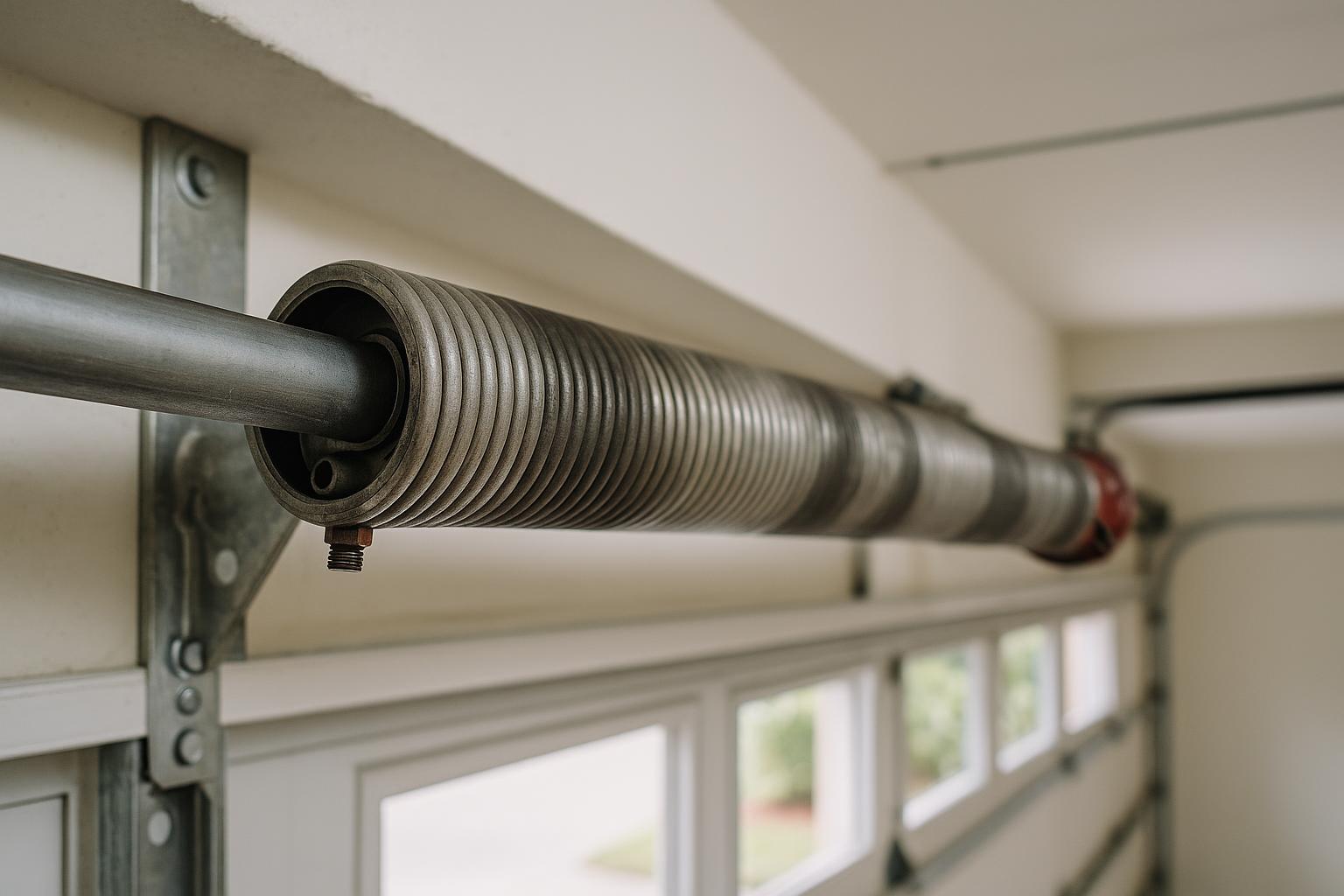
Your Garage Door Springs Are Working Harder Than You Think
Every time you open and close your garage door, the springs do the heavy lifting — literally. A standard residential garage door can weigh anywhere from 130 to 350 pounds, and the springs are responsible for counterbalancing all of that weight. Without functioning springs, your garage door opener alone doesn't have the power to lift the door, and attempting to open it manually would be nearly impossible.
Most homeowners in Port Charlotte use their garage doors multiple times a day without giving the springs a second thought. But like any mechanical component, springs have a limited lifespan. Knowing the warning signs of worn or failing springs can save you from an unexpected breakdown — or worse, a dangerous situation.
How Long Do Garage Door Springs Last?
The average torsion spring is rated for about 10,000 cycles, with one cycle being a single open-and-close operation. If you use your garage door four times a day, that works out to roughly seven years of use. Extension springs, which are more common on older or lighter doors, tend to have a similar or slightly shorter lifespan.
However, several factors can shorten that lifespan, especially here in Southwest Florida:
- Humidity and salt air: The coastal climate around Port Charlotte, Punta Gorda, and Englewood accelerates rust and corrosion on metal springs.
- Lack of maintenance: Springs that aren't lubricated regularly develop more friction, which leads to faster wear.
- Temperature fluctuations: While Florida doesn't see extreme cold, even moderate temperature swings cause metal to expand and contract over time.
- Door weight changes: Adding insulation panels or replacing sections with heavier materials puts extra strain on existing springs.
Warning Signs Your Garage Door Springs Are Failing
Spring failure doesn't always happen all at once. In many cases, there are clear warning signs that give you time to schedule a replacement before the spring snaps completely. Here's what to watch for:
1. The Door Feels Heavier Than Usual
Try disconnecting your garage door opener by pulling the emergency release cord, then lift the door manually. A properly balanced door with healthy springs should feel relatively light and stay in place when you lift it halfway. If the door feels extremely heavy or slams down when you let go, the springs are losing their tension.
2. The Door Opens Unevenly or Crooked
If one spring is weaker than the other, or if one has already broken, the door may rise unevenly — one side lifting faster than the other. This puts stress on the tracks, rollers, and opener, and can lead to the door getting stuck or jammed.
3. You Hear a Loud Bang from the Garage
A broken torsion spring releases a tremendous amount of stored energy and makes a sound that many homeowners describe as a gunshot or a car backfiring. If you hear a loud bang coming from your garage and find that the door won't open, a broken spring is the most likely culprit.
4. There's a Visible Gap in the Spring
Torsion springs are mounted on a metal shaft above the door. When a spring breaks, you'll usually see a visible gap of a few inches where the coils have separated. This is the easiest way to confirm a break without any guesswork.
5. The Opener Struggles or Stops Working
Your garage door opener is designed to work with the springs, not to replace them. When springs weaken, the opener has to work much harder to lift the door. You might notice the motor straining, the door opening more slowly, or the opener shutting off before the door is fully open. Continuing to use the opener in this condition can burn out the motor.
6. Rust and Corrosion on the Coils
Take a look at your springs from time to time. If you see significant rust, pitting, or corrosion on the coils, the spring's structural integrity is compromised. Rust also increases friction between the coils, which accelerates wear. This is especially common in homes near the coast in areas like Rotonda West and Englewood.
Why You Shouldn't Replace Garage Door Springs Yourself
We understand the DIY spirit — and there are plenty of garage door tasks that handy homeowners can handle on their own. Spring replacement is not one of them.
Garage door springs are under extreme tension. A torsion spring that releases unexpectedly can cause serious injury or even death. Professional technicians use specialized tools and follow strict safety procedures to remove and install springs safely. The cost of professional replacement is modest compared to the risk of a DIY attempt gone wrong.
Additionally, a trained technician will ensure the new springs are the correct size, weight rating, and type for your specific door. Installing the wrong springs can lead to premature failure, poor door balance, and damage to your opener.
What to Expect During a Spring Replacement
When you call a professional for spring replacement, here's what the process typically looks like:
- Inspection: The technician inspects the entire door system — springs, cables, rollers, tracks, and opener — to identify all issues.
- Spring removal: The old springs are carefully unwound and removed using professional winding bars.
- New spring installation: New springs matched to your door's weight and size are installed and wound to the correct tension.
- Balance testing: The door is tested for proper balance, ensuring it opens and closes smoothly and stays in place when partially open.
- Lubrication and adjustments: All moving parts are lubricated, and any necessary adjustments are made to the tracks, cables, and opener settings.
The entire process usually takes about an hour for a standard residential door.
Should You Replace One Spring or Both?
If your door has two torsion springs and only one has broken, we strongly recommend replacing both at the same time. The remaining spring has the same amount of wear and is likely to break soon. Replacing both springs together saves you from paying for a second service call in a few weeks or months, and it ensures the door stays properly balanced.
Keep Your Springs Healthy with Regular Maintenance
You can extend the life of your garage door springs with a few simple maintenance habits:
- Lubricate the springs with a silicone-based spray every three to four months.
- Visually inspect the springs for rust, gaps, or deformation a few times a year.
- Schedule annual professional maintenance to have the entire system checked, balanced, and adjusted.
A little preventive care goes a long way, especially in the humid climate we experience here in Port Charlotte and the surrounding communities.
Don't Wait for a Breakdown
If you've noticed any of the warning signs listed above, don't wait for a complete spring failure to take action. A broken spring means your garage door is out of commission until it's repaired, which can disrupt your daily routine and leave your home less secure.
Port Charlotte Garage Door Co provides fast, professional spring replacement for homeowners throughout Port Charlotte, North Port, Punta Gorda, Murdock, and the surrounding areas. We carry a wide selection of springs on our service trucks so most repairs can be completed in a single visit. Give us a call to schedule an inspection or to get help with an emergency spring failure — we're here to keep your garage door running safely and smoothly.