
You're standing in the garage grabbing something out of the freezer, and you feel it: warm, sticky air pooling around your ankles even though the AC has been running all afternoon. Your spouse says it's the garage door. You say it's probably just the heat outside doing what heat does. Here's the actual answer, so you can both stop guessing.
Why the Garage Door Even Matters for Your AC Bill
If your garage is attached to the house, it isn't a separate building with its own climate — it shares at least one wall, and often ductwork or an air handler closet, with the rooms you're paying to cool. When the garage door seals poorly, hot, humid outside air doesn't stay out there. It seeps in, warms up that shared wall, and pushes your air conditioner to work harder to keep the rest of the house comfortable. In a climate where outdoor air is regularly hot and loaded with moisture, that's not a small effect — humid air takes more energy to cool than dry air, so every gap is doing double duty against you.
What's Actually Letting the Air In
Garage doors aren't sealed like a refrigerator, but they're supposed to come close. A few trouble spots do most of the damage:
- The bottom seal (astragal): This rubber strip along the bottom of the door is the first thing to crack, flatten, or pull away from years of heat and sun. Once it's compressed or torn, there's a visible gap along the entire width of the door.
- Side and top weatherstripping: The vinyl strips along the frame dry out and shrink in constant heat, leaving thin lines of daylight down the sides.
- Panel warping: Humidity and repeated wet-dry cycles from afternoon storms can cause steel panels to swell slightly or wood composite panels to bow. Even a small warp keeps the door from sitting flush against the frame.
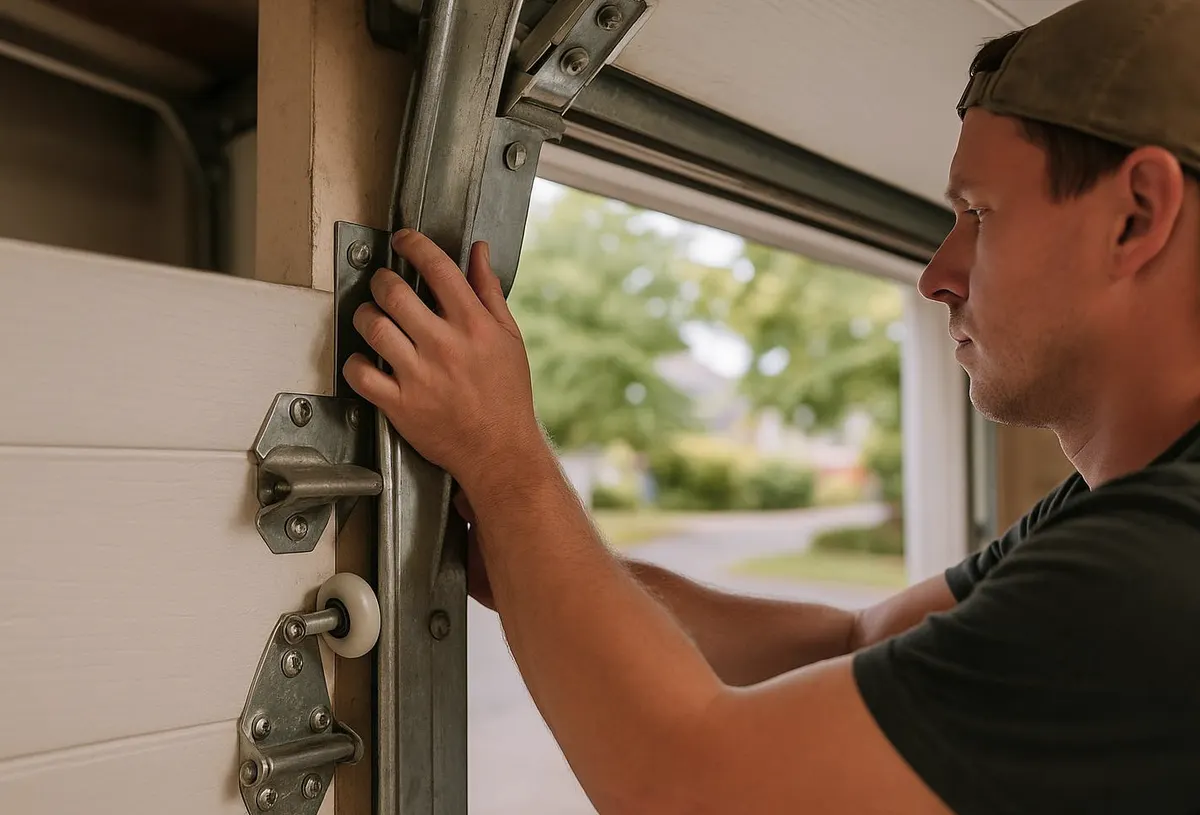
- Rust at the hinges and bottom brackets: Salt air speeds this up for homes closer to the coast. Rust can throw off alignment just enough that the door no longer closes evenly, leaving gaps on one side.
How to Check Your Own Door (No Tools Required)
Settle the argument with a few quick checks:
- Daylight test: Close the garage door in the daytime, turn off the garage lights, and look for any thin lines of light around the edges or along the bottom. If you can see daylight, air is moving through that same gap.
- Dollar bill test: Close the door on a dollar bill at a few points along the bottom seal. If it slides out easily with little resistance, the seal isn't gripping like it should.
- Hand test: On a hot afternoon, run your hand slowly along the inside edges of the closed door. Warm air moving past your palm means there's a gap, even if you can't see one.
- Look at the seal itself: Flattened, cracked, or stiff rubber that's lost its flexibility won't compress against the floor the way a healthy seal does.
It's Not Just the Bill — It's the Humidity Too
A leaky garage door doesn't just let in heat. It lets in moisture. That extra humidity can settle into stored boxes, tools, and anything else in the garage, and if there's a shared wall or door into the house, it adds to the humidity load your AC has to pull out of the air. This is also why garages with persistent gaps tend to show more rust on tools, hardware, and the door track itself over time — the moisture never really leaves.
What Actually Fixes It
The good news is that most of these fixes are straightforward and don't require replacing the whole door:
- Replace the bottom seal. This is the single biggest source of air leakage on most doors and the easiest to fix. A new seal restores a tight line along the floor.
- Replace side and top weatherstripping. Inexpensive, and it closes up the gaps running down both sides and across the top.
- Realign the door. If rust or worn rollers have thrown off the track alignment, the door may be closing unevenly even with good seals installed. Alignment work gets the door sitting flush again.
- Address warped panels. A panel that's bowed from humidity usually can't be bent back reliably — at that point it's a question of replacing the single panel versus the door, which depends on the age and condition of the rest of the door.
When to Call Port Charlotte Garage Door Co
If the daylight test or dollar bill test shows a gap, or if you've noticed rust around the hinges and bottom brackets, that's worth a proper look before another round of summer heat and storms rolls through. Our Garage Door Maintenance visits cover a full seal and weatherstripping inspection, track and roller alignment, and a check for rust or corrosion starting to affect how the door sits in the frame. If the bottom seal or side weatherstripping is shot, our Garage Door Repair service handles replacement on the spot in most cases, and if a panel has warped beyond a quick fix, we'll walk you through whether a single panel replacement or a full door makes more sense for your situation.
If your garage door has been letting the heat win, give Port Charlotte Garage Door Co a call. We serve homeowners throughout Port Charlotte, Punta Gorda, North Port, Englewood, Murdock, Rotonda West, Deep Creek, and Charlotte Harbor, and we're glad to come take a look and tell you straight whether it's a quick seal swap or something bigger.