
The one-sentence rule
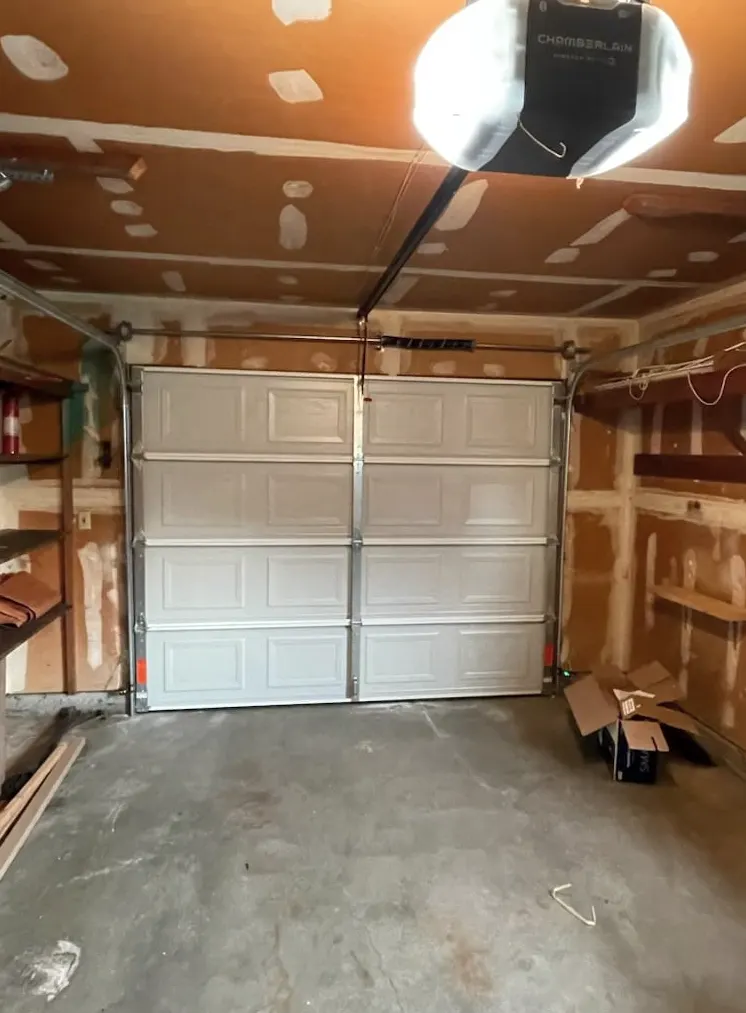
If your opener is set correctly, the door should glide to a full stop within about an inch of the floor and reverse the instant it meets real resistance — it shouldn't strain, slam, grind, or need a second push to finish closing.
That's the rule. Here are the exceptions that cause most of the arguments: a door that's slightly out of balance from humidity swelling the panels, rollers that have gone rusty from salt air and are dragging instead of rolling, or a door that was recently installed and never had its limits set for its actual weight. In all of those cases, the opener looks like it needs more force. It doesn't. It needs the actual problem fixed.
Two different settings, two different jobs
People use "the settings" like it's one thing. It's not — there are two separate dials or digital adjustments, and confusing them is where the arguments start.
Travel limits
Travel limits tell the opener exactly where to stop in each direction: how far up is "fully open" and how far down is "fully closed." If the limit is set too short, the door stops a few inches above the floor and never seals. If it's set too long, the opener keeps trying to drive the door into the ground after it's already closed, which strains the motor and the door itself.
Force settings
Force settings control how hard the opener is allowed to push or pull before it decides something is blocking it and reverses. This is a safety feature, not a power boost. It exists so the door stops on a stray hose, a kid's bike, or a pet — not to help a struggling door muscle its way through a problem.
When a door won't close all the way, the instinct is to turn up the force. That's almost always the wrong fix. More force doesn't solve a travel limit that's set too short or a track that's binding — it just means the opener pushes harder against whatever's actually wrong.
Why this matters more here than in most places
Port Charlotte's climate puts real stress on these settings throughout the year, not just once:
- Humidity swings: Wood and composite doors swell in heavy moisture and shrink back down in drier stretches. A travel limit set perfectly in June can be off by enough to matter by October.
- Salt air and rust: Closer to Charlotte Harbor, rollers and hinges corrode faster. Corroded rollers drag in the track, which the opener reads as resistance — and an owner "fixes" by raising the force instead of replacing the rollers.
- Wind-load hardware: Hurricane-rated doors and openers are heavier and built to tighter tolerances. Limits and force need to match that extra weight, not be left at whatever the installer guessed.
- Afternoon downpours: Sudden humidity spikes can cause brief binding in the track that resolves once things dry out. If the force gets cranked up to compensate during a storm, it stays cranked up long after the real cause is gone.
What happens when the settings are wrong
Force set too high is the dangerous one. The door will keep pushing against an obstruction instead of stopping — a genuine hazard if a pet, a kid, or your own foot is in the way. It also accelerates damage: stripped gears inside the opener, bent panels, torque on the springs they weren't designed to handle, and in bad cases a burned-out motor.
Force set too low causes the opposite headache: the door reverses on its own for no obvious reason, refuses to latch all the way, or won't close against a light breeze — which is its own problem heading into storm season, since a door that won't fully close isn't sealed against wind-driven rain.
Travel limits set wrong cause the more visible arguments: the door that stops short every single time, or the one that keeps grinding after it should have already stopped.
A quick test before you touch anything
Lay a 2x4 or a roll of paper towels flat on the floor where the door closes. Run the door down. It should hit the object and reverse immediately, without hesitation. If it keeps pushing, crushes the object, or takes a beat before reversing, the force is set too high and needs to come down — don't just leave it and hope.
If the door won't make it all the way down even with nothing in the way, don't reach for the force dial first. Check the track for rust or debris, check that the rollers spin freely, and make sure nothing is physically binding. Adjust force only after the mechanical side checks out, and adjust it in small increments, testing the reversal after each change.
When to call us
If you've already ruled out an obvious obstruction and the door still won't close right, or it's reversing unpredictably, that's a job for Port Charlotte Garage Door Co rather than more dial-turning. During a Garage Door Opener Repair & Installation visit, we check the door's balance and track condition first — because an opener fighting a mechanical problem will never hold its settings no matter how many times you adjust them. We also handle this as part of routine Garage Door Maintenance, so the limits and force get checked before hurricane season stress-tests them for you.
If the door is stuck wide open or won't budge shut with a storm rolling in, that's an Emergency Garage Door Service call, not a weekend project.
Give us a call to get your opener's force and travel limits set correctly — serving Port Charlotte, Punta Gorda, North Port, Englewood, Murdock, Rotonda West, Deep Creek, and Charlotte Harbor, FL.