
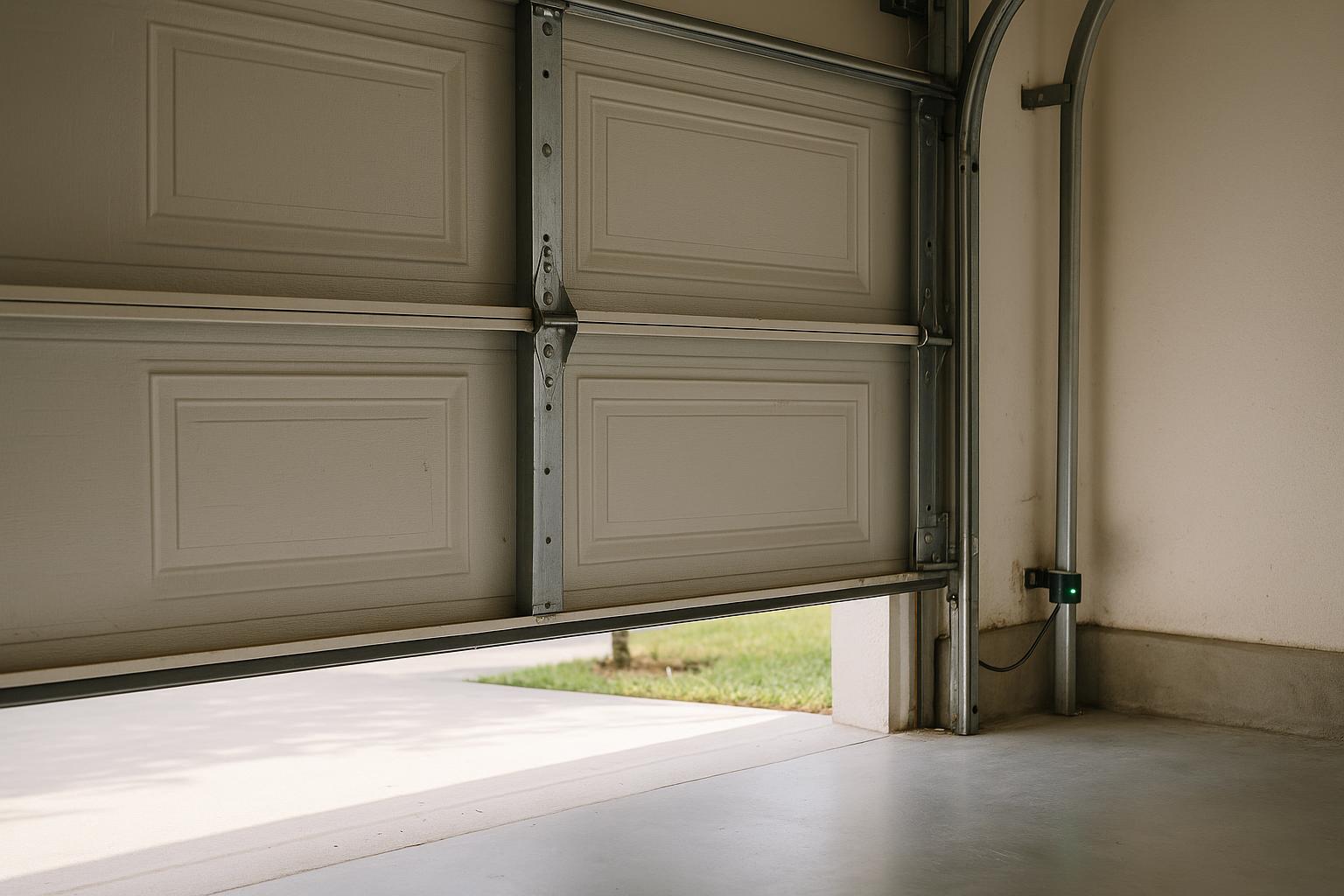
A Frustrating Problem That's More Common Than You Think
You press the button on your garage door remote, watch the door glide downward, and then — just before it reaches the floor — it stops and reverses right back up. If this scenario sounds familiar, you're not alone. This is one of the most common garage door complaints we hear from homeowners in Port Charlotte, and it can range from a simple fix to a sign of a more serious issue.
The good news is that understanding why your garage door reverses can help you determine whether it's a quick DIY adjustment or something that requires professional attention. Let's walk through the most likely causes and what you can do about each one.
The Safety Sensors Are Misaligned or Blocked
This is the number one reason garage doors reverse before closing completely. Every modern garage door opener manufactured after 1993 is required to have photo-eye safety sensors installed near the bottom of the door tracks, about six inches off the ground. These sensors send an invisible beam across the doorway, and if anything breaks that beam — a trash can, a bicycle, a leaf, or even a cobweb — the door will automatically reverse to prevent injury or damage.
Here's what to check:
- Look for obstructions. Walk along the bottom of your garage door opening and remove anything that might be blocking the sensor beam.
- Clean the sensor lenses. In Port Charlotte's humid climate, dust, pollen, and moisture can accumulate on the small glass lenses. Wipe them gently with a soft cloth.
- Check the alignment. Each sensor has a small LED light. If one is blinking rather than glowing steadily, the sensors are likely out of alignment. Gently adjust the sensor bracket until both lights are solid.
If cleaning and realigning the sensors doesn't solve the problem, the wiring connecting the sensors to the opener unit may be damaged and should be inspected by a technician.
The Close-Limit Switch Needs Adjustment
Your garage door opener has a setting called the close-limit switch, which tells the motor exactly how far the door needs to travel before it's fully closed. If this setting is off — even by a small amount — the opener may interpret the door hitting the ground as an obstruction and trigger the auto-reverse safety feature.
This is especially common after a new garage door installation or if the opener has been recently serviced. Most openers have adjustment screws on the motor unit labeled "down limit" or something similar. Turning this screw in small increments can extend the travel distance so the door closes completely without reversing.
If you're not comfortable making this adjustment yourself, it's a quick fix for any experienced garage door technician.
The Tracks Are Dirty, Bent, or Misaligned
Your garage door travels along metal tracks on either side of the opening. Over time, these tracks can accumulate dirt and debris, develop rust spots, or become slightly bent from accidental impact. When the rollers encounter resistance along the track, the opener's safety mechanism may interpret that resistance as an obstruction and reverse the door.
Inspect your tracks visually for any obvious dents, bends, or buildup. You can clean the tracks with a damp cloth and a mild household cleaner. However, if the tracks are bent or significantly misaligned, attempting to fix them yourself can be dangerous. The tracks are under tension from the door's weight, and improper handling can lead to injury.
Worn or Broken Springs Are Creating Imbalance
Garage door springs bear the majority of the door's weight, making it possible for the opener to lift and lower the door smoothly. When springs begin to wear out, they lose tension, which means the opener has to work harder. This added strain can cause the door to behave erratically, including reversing during the closing cycle.
You can test your door's balance by disconnecting the opener (pull the red emergency release handle) and manually lifting the door halfway. A properly balanced door should stay in place. If it falls or rises on its own, the springs likely need attention.
Important safety note: Garage door springs are under extreme tension and can cause serious injury if handled improperly. Spring replacement should always be performed by a trained professional.
The Opener's Force Settings Are Too Low
In addition to the limit switch, your garage door opener also has a force setting that determines how much resistance the motor will push through before reversing. If this setting is too sensitive, the door may reverse from normal friction encountered during operation.
Like the limit switch, the force setting can usually be adjusted with a small screw on the opener unit. Increase the downward force in small increments and test the door after each adjustment. Be careful not to set the force too high, as this can override the safety reverse feature and create a hazard.
Weather and Humidity Can Play a Role
Living in Port Charlotte means dealing with heat, humidity, and the occasional storm. These weather conditions can affect your garage door in ways you might not expect. Wooden garage doors can swell in humid conditions, creating extra friction. Metal components can expand in extreme heat, slightly altering the door's travel path. Even the rubber weather seal at the bottom of the door can become sticky or warped, adding resistance that triggers a reversal.
Regular garage door maintenance — including lubricating moving parts, inspecting weather seals, and checking hardware — can prevent many of these weather-related issues before they become bigger problems.
When to Call a Professional
Some of the fixes described above are straightforward enough for a handy homeowner to tackle. But if you've worked through the basics and your garage door is still reversing, or if the issue involves springs, cables, or track damage, it's time to call in a professional.
Here are signs you should schedule a service call rather than continuing to troubleshoot on your own:
- The door makes loud grinding, popping, or snapping sounds
- You notice frayed cables or visibly damaged springs
- The door appears crooked or uneven when moving
- The problem started after a storm or power surge
- You've adjusted the sensors, limits, and force settings with no improvement
At Port Charlotte Garage Door Co, we diagnose and repair reversing garage doors regularly for homeowners throughout Port Charlotte, Punta Gorda, North Port, and the surrounding communities. We carry common replacement parts on our service vehicles so most repairs can be completed in a single visit.
Don't Ignore a Reversing Garage Door
It might be tempting to just keep pressing the button until the door finally stays down, but a garage door that won't close properly is both a security risk and a safety hazard. The auto-reverse feature exists to protect your family, your pets, and your property. When it's triggering unnecessarily, something in the system needs attention.
Whether it's a simple sensor cleaning or a more involved repair, addressing the issue promptly will save you time, money, and frustration in the long run. If you need help getting your garage door back on track, give us a call — we're always happy to help.